
Has your child recently received an Autism Spectrum Disorder diagnosis?
You might be experiencing a gamut of emotions. That is okay. We aren’t here to tell you how to feel, as we have been there too. But what we can tell you about are resources that work for us with our own children at our homes and with our clients.
“I know for me, I felt almost crazy for thinking something could be a little “off” about my child, because everyone else around me was saying ‘you’re just overthinking it’, or ‘all babies develop at their own pace’, or ‘this is your first child, so you just don’t know’…. I was relieved that I wasn’t just imagining things, I followed my gut, persisted, and was able to finally get him the help he needed.”
-Melissa, a Spectrum employee and friend whose firstborn was diagnosed with ASD.
We understand that everyone responds differently to this news, so let’s begin by introducing you to a few of the resources we have used to successfully inform ourselves and clients.
Get every referral possible.
Studies prove that some young children have the ability to make drastic progress when Autism is found early and intervention occurs. Begin your journey by making an appointment with your child’s pediatrician and requesting referrals to a developmental Occupational Therapy, Speech, and Applied Behavior Analysis (ABA).
Contact your community services board.
This resource has valuable information regarding early intervention services, providers within your area, connecting you with medicaid waivers (should your child qualify), disability resource centers, and local support groups to assist you through the process. That way, you don’t have to do all of the google searching yourself!
Ask Questions
Call around, ask questions, and set up assessments for services. Not every provider will be the perfect fit for your child, or your family, so you should evaluate the agencies as well.
Educate yourself
Learn as much as possible about Autism and what you can do to support your child. There will be a plethora of information that comes your way. Try to decide what methods work for your family. Autism treatment is not a “one size fits all”, so some of this journey will be trial and error, and that is okay.
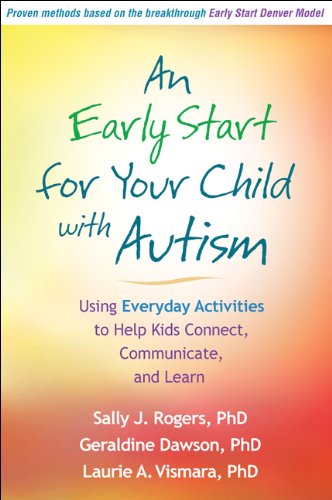
The book below, An Early Start for Your Child with Autism: Using Everyday Activities to Help Kids Connect, Communicate, and Learn, is a favorite resource of Nancy Daly, our CEO. It discusses research on how parents can play a pivotal role in helping their young children with ASD.
Talk to your friends and family.
It is important to have a support group, not just for your child, but for you and our partner. Some family members or friends may not know how to handle the news, so communicate what you need or ways they can help. If they care, they will want to be encouraging in the ways that you and your family need. This process helps show you which people are going to be more reliable, and who you may want to distance yourself from. You are your child’s #1 advocate, and you need the people who are going to only work with you, not against you!
There are many ways to navigate the ASD journey you are on. We hope that this blog post has provided you with a few ideas to point you in an informative, and hopefully helpful, direction.


